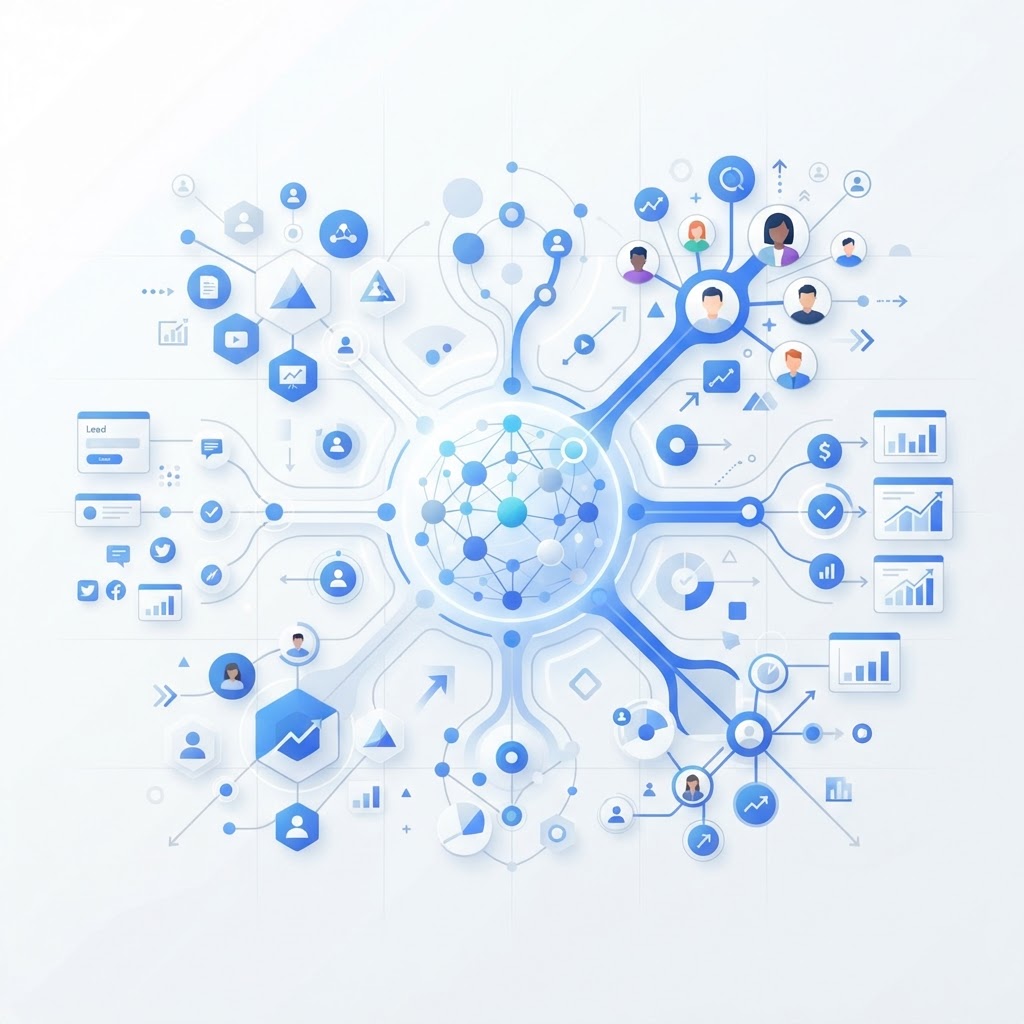
A customer data platform (CDP) creates a unified customer database by collecting data from all sources into a single profile. It is the foundation for personalized marketing.
CDP vs CRM vs DMP
- CRM. Manages direct customer interactions. Sales and support data
- CDP. Unifies all customer data from every source into one profile
- DMP. Anonymous third-party data for advertising. Cookie-based, declining
What a CDP Does
Data Collection
- First-party data. Website, app, CRM, email, purchases
- Identity resolution. Stitch data from different devices and channels into one person
- Real-time ingestion. Events flow in as they happen
- Historical data. Import past interactions
Unified Profile
- Single customer view. One record per person with all interactions
- Attributes. Demographics, preferences, behavior
- Timeline. Chronological history of all touchpoints
- Segments. Dynamic groups based on any combination of data
Activation
- Marketing tools. Push segments to email, ads, social
- Personalization. Tailor website and app experiences
- Sales. Alert reps to high-intent behavior
- Customer support. Full context for every interaction
Business Benefits
- Personalization at scale. Relevant messages to the right people
- Better attribution. Understand the full customer journey
- Higher conversion. Targeted segments convert better
- Reduced waste. Stop marketing to the wrong people
- Compliance. Centralized data makes privacy management easier
Choosing a CDP
- Segment. Developer-focused, great data collection
- mParticle. Enterprise, mobile-first
- Tealium. Tag management plus CDP
- BlueConic. Marketing-focused, B2C
- Treasure Data. Enterprise, B2B and B2C
Key Features to Evaluate
- Identity resolution. How well does it stitch identities?
- Integrations. Does it connect to your tools?
- Real-time. How fast is data available?
- Segmentation. How flexible are the audience builders?
- Privacy controls. Consent management, data deletion
- Pricing model. Per profile, per event, flat rate?
Implementation Steps
- Define use cases. Personalization, attribution, retention?
- Audit data sources. What data do you have, where?
- Choose a CDP. Match to your needs and budget
- Plan identity resolution. How will you match users across devices?
- Implement tracking. Collect events from all sources
- Build segments. Start with 3-5 high-value audiences
- Activate. Connect to marketing tools and measure results
How Switch 2 One Helps
We help you implement a CDP that powers personalization. Book a free strategy session.