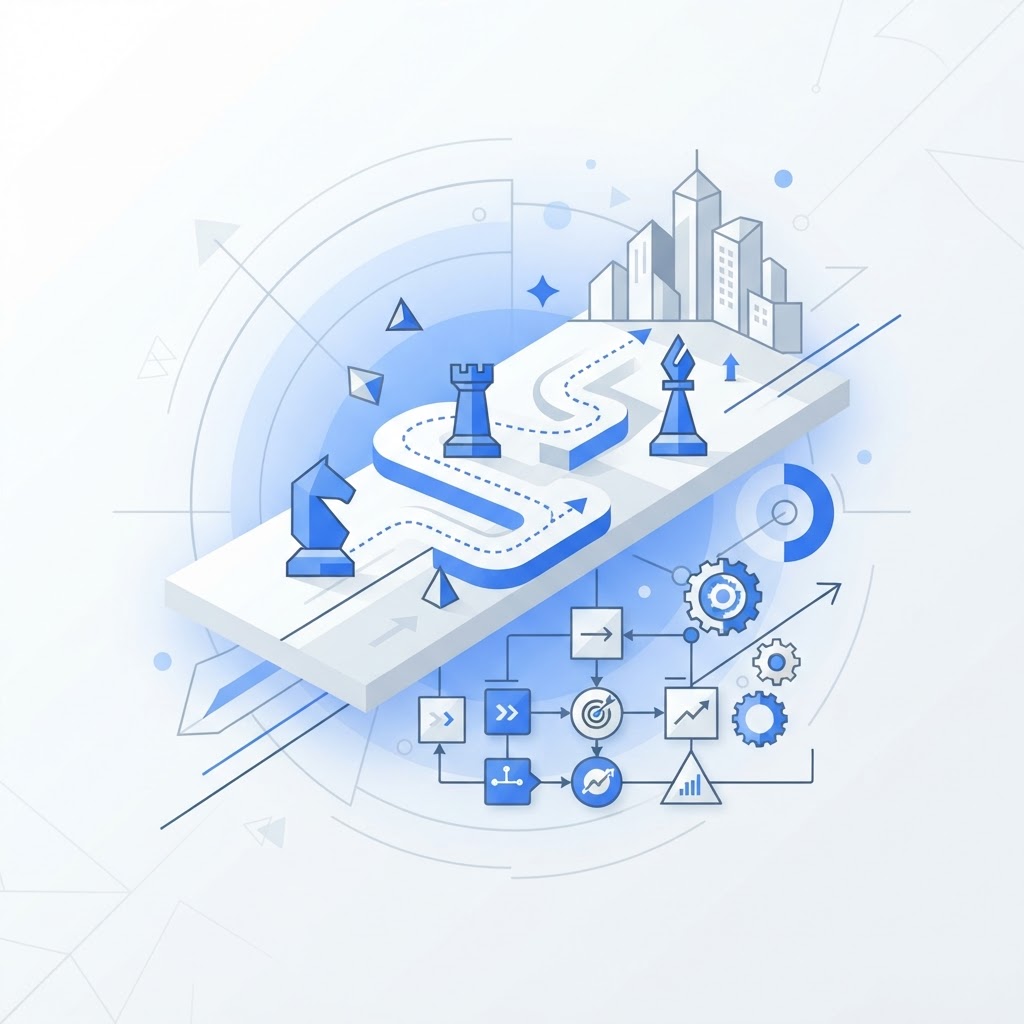
Digital transformation is the integration of digital technology into all areas of your business, fundamentally changing how you operate and deliver value.
What Digital Transformation Is Not
- Not just buying software
- Not a one-time project
- Not only an IT initiative
- Not going paperless
What It Is
- Rethinking business processes with digital capabilities
- Changing how you engage customers
- Enabling data-driven decisions
- Building a culture of continuous improvement
Phases of Digital Transformation
Phase 1: Assessment
- Current state audit. What systems, processes, and data do you have?
- Pain points. What slows you down, causes errors, or frustrates customers?
- Competitive analysis. How do competitors use technology?
- Customer expectations. What do your customers expect digitally?
- Digital maturity. Where are you on a scale of 1-5?
Phase 2: Vision and Strategy
- Business goals. What outcomes do you want? (revenue, efficiency, experience)
- Digital vision. What does the future state look like?
- Priorities. Which areas have the highest impact?
- Budget and resources. What can you invest?
- Timeline. Realistic phases over 1-3 years
Phase 3: Foundation
- Core systems. CRM, ERP, website, accounting
- Data infrastructure. Where does data live, how does it flow?
- Integration. Connect systems so data moves automatically
- Security. Protect data from the start
- Skills. Train your team or hire expertise
Phase 4: Process Optimization
- Document current processes. Before automating, understand them
- Remove waste. Eliminate unnecessary steps
- Automate. Implement automation for repetitive tasks
- Measure. Track efficiency gains
Phase 5: Customer Experience
- Digital touchpoints. Website, app, portal, chat
- Self-service. Let customers do more themselves
- Personalization. Tailor experiences with data
- Omnichannel. Consistent experience across channels
- Feedback loops. Listen and improve continuously
Phase 6: Advanced Capabilities
- Analytics and BI. Data-driven decisions
- AI and ML. Predictive and automated intelligence
- Automation at scale. End-to-end process automation
- Innovation. New digital products or services
Common Pitfalls
- Technology-first thinking. Tools before strategy
- Big bang approach. Trying everything at once
- No change management. People resist what they don't understand
- No measurement. Cannot prove ROI without metrics
- Ignoring culture. Digital transformation is as much cultural as technical
Measuring Success
- Efficiency. Time saved, cost reduced
- Revenue. New digital revenue, higher conversion
- Customer satisfaction. NPS, reviews, retention
- Employee productivity. Output per employee
- Innovation. New products, features, or capabilities launched
How Switch 2 One Helps
We guide your digital transformation from assessment to execution. Book a free strategy session.